
Every single day, millions of families, college graduates, retirees, and growing companies pack up their belongings and relocate to new neighborhoods, offices, and cities. Because residential turnover, commercial lease renewals, and life transitions happen regardless of broader economic shifts, the relocation industry generates steady, year-round demand for dependable physical labor and logistics. For ambitious entrepreneurs who enjoy hands-on operations, team leadership, and visible daily results, launching a relocation startup offers an accessible entry point with strong cash-flow potential.
However, a relatively low barrier to entry does not mean easy success. Countless unorganized operators buy a used truck, post an ad online, and fold within their first year after getting blindsided by federal operating authority fines, uninsured cargo claims, underpriced hourly quotes, or unreliable labor. Customers entrust their most valuable possessions—family heirlooms, fragile electronics, hardwood floors, and newly painted walls—to the crew walking through their front door. Winning repeat business and five-star referrals requires running a disciplined, fully insured, customer-obsessed operation from day one.
Choosing Your Niche, Business Model, and Pricing Strategy

Deciding Between Labor-Only, Local Hauling, and Interstate Routes
Before filing formation paperwork or shopping for commercial trucks, define the exact scope of your launch. Trying to offer every type of relocation across multiple states on day one stretches startup capital thin and delays regulatory approvals. Instead, evaluate three primary entry models:
- Labor-only loading and unloading: You provide trained crews, dollies, and furniture pads while customers rent their own U-Haul, Penske, or portable storage container. Labor-only startups require minimal upfront capital and zero commercial fleet insurance, making them ideal for testing local demand before buying trucks.
- Intrastate local hauling: Operating as a local mover within your metro area or state borders lets you capture higher-ticket full-service residential and commercial bookings using your own 20- to 26-foot box trucks. Most states regulate intrastate household goods carriers through a state Department of Transportation or Public Utilities Commission.
- Interstate multi-state transport: Registering as local long distance movers authorized to transport household goods across state lines unlocks lucrative cross-country relocations, though it requires federal Motor Carrier operating authority, higher cargo liability limits, and strict adherence to federal tariff and estimate rules. Many founders of local long distance movers master local hourly moves during year one and add interstate authority once cash flow stabilizes.
Building Profitable Hourly Rates, Travel Fees, and Binding Estimates
Pricing too low to win early bookings is one of the fastest ways to bankrupt a new relocation startup. Your hourly rate must comfortably cover crew wages, payroll taxes, workers’ compensation insurance, fuel, commercial auto insurance, truck maintenance, credit card processing fees, and healthy net profit.
Structure your rate sheet transparently around real operational costs:
- Base hourly minimums: Set a two-hour or three-hour minimum on weekdays and a three- or four-hour minimum on peak weekends so short apartment jobs still cover dispatch overhead. Typically, rates scale clearly by crew size (e.g., two crew members plus one truck, three crew members plus one truck, or four crew members plus two trucks).
- Portal-to-portal travel time: Charge a standardized flat travel fee or round-trip drive time from your dispatch yard to the origin address and back from the destination address so unpaid highway traffic never erodes job margins.
- Packing materials and specialty item fees: Price heavy-duty moving boxes, bubble wrap, mattress bags, and commercial stretch wrap transparently, and apply flat handling surcharges for extreme-weight items such as upright pianos, gun safes, slate pool tables, and sub-zero refrigerators.
Estimating Startup Capital and Six-Month Operating Reserves
Depending on whether you lease or purchase your first commercial truck, launching a compliant single-truck operation generally requires between $25,000 and $65,000 in initial capital. Allocate funds across legal entity setup, federal and state registration fees, commercial auto and cargo insurance down payments (insurers often require 20% to 25% upfront), truck acquisition, protective moving equipment, branded uniforms, website launch, and at least three to six months of working capital to cover fuel and weekly payroll before receivables settle.
Navigating Business Formation, Licensing, and Commercial Insurance

Forming an LLC, Obtaining an EIN, and Opening Commercial Accounts
Because relocation work involves heavy lifting inside private homes and operating commercial vehicles on public highways, never operate as an unincorporated sole proprietorship. Form a Limited Liability Company (LLC) through your Secretary of State to separate your personal home, savings, and vehicles from business liabilities.
Once your LLC articles of organization are approved, obtain a free Employer Identification Number (EIN) directly from the IRS website, open a dedicated commercial checking account and business credit card, and configure cloud accounting software from day one so every fuel receipt, insurance payment, and customer invoice is tracked cleanly for tax season.
Completing USDOT, FMCSA Motus, and State Operating Authority Filings
Operating a commercial box truck without proper federal and state credentials can result in immediate roadside out-of-service orders and five-figure fines. Even if you operate strictly within one state, most states require a USDOT number for commercial vehicles exceeding 10,001 pounds Gross Vehicle Weight Rating (GVWR), alongside an intrastate household goods permit, background-checked owner filings, and published rate tariffs.
If you plan to haul freight or household goods across state lines, register through the Federal Motor Carrier Safety Administration (FMCSA) Unified Registration System (Motus) to obtain both a USDOT number and Motor Carrier (MC) operating authority for household goods. You will also need to file a BOC-3 designation of process agents covering all states, complete annual Unified Carrier Registration (UCR), and provide every interstate customer with the mandatory federal “Your Rights and Responsibilities When You Move” booklet to operate a fully compliant moving company.
Securing Commercial Auto, Cargo, General Liability, and Workers’ Comp Policies
Insurance represents one of the largest fixed expenses for legitimate moving companies, yet carrying comprehensive policies is also your strongest sales advantage when competing against uninsured Craigslist operators. Work with a commercial transportation insurance broker to bind four distinct coverage layers:
- Commercial Auto Liability: Covers bodily injury and property damage caused by your trucks on public roadways; federal rules mandate at least $750,000 in combined single-limit liability for interstate vehicles over 10,001 pounds, and many commercial property managers require $1,000,000 certificates before allowing trucks onto loading docks.
- Motor Truck Cargo Insurance: Protects customer household goods and office equipment against damage, fire, or theft while loaded inside your vehicle.
- Commercial General Liability (CGL): Covers accidental damage to a client’s physical property during loading and unloading—such as gouged hardwood floors, scratched drywall corners, or broken banisters—and supplies Certificates of Insurance (COIs) required by high-rise condo boards and office towers.
- Workers’ Compensation Insurance: Mandatory in nearly every state once you hire employees, protecting your business from devastating medical claims if a crew member suffers a back strain or lifting injury on the job.
Acquiring Trucks, Protective Gear, and Dispatch Software
Leasing vs. Buying Your First 20- to 26-Foot Box Truck
Choosing the right commercial vehicle directly shapes your reliability and maintenance overhead during year one. A 26-foot straight box truck with a 25,999-pound GVWR hits the sweet spot for residential and commercial relocations: it holds the contents of a typical three- to four-bedroom home in a single load while staying just below the 26,001-pound threshold that requires drivers to hold a Commercial Driver’s License (CDL).
Evaluate your truck acquisition options carefully:
- Buying a pre-owned commercial truck ($25,000 to $50,000): Look for fleet-maintained diesel or heavy-duty gas chassis under 150,000 miles equipped with a translucent fiberglass roof (which floods the cargo box with natural daylight), interior wooden slat tie-rails or E-track channels, a wide pull-out walk ramp, and a hydraulic tuck-away liftgate for heavy appliances. Always pay an independent diesel mechanic for a pre-purchase inspection.
- Commercial leasing or seasonal rentals: Leasing a newer truck through a national commercial fleet provider lowers upfront cash outlay and bundles preventive maintenance into a predictable monthly payment—while supplemental short-term rentals let you double fleet capacity during peak summer moving weekends without carrying idle truck payments in January.
Outfitting Every Truck With Essential Dollies, Pads, and Floor Protection
Showing up at a customer’s home with professional protective equipment immediately distinguishes trained movers from amateur day laborers. Outfitting each truck properly costs roughly $2,500 to $4,000 per vehicle and prevents thousands of dollars in avoidable damage claims:
- 72 heavy-duty quilted furniture blankets: Thick, double-stitched moving pads protect wood dressers, dining tables, and leather sofas from scratches and rub marks inside the cargo box.
- Four-wheel hardwood carpeted dollies and two-wheel appliance hand trucks: Equip trucks with rubber-wheel dollies that roll smoothly over thresholds without marking floors, alongside heavy-duty appliance hand trucks featuring stair-climber tracks and ratcheting cinch straps.
- Commercial stretch wrap and giant rubber bands: 18-inch heavy-gauge stretch film secures dresser drawers shut and keeps quilted pads wrapped tightly around upholstered furniture.
- Neoprene floor runners, door-jamb pads, and banister covers: Laying padded non-slip runners across entryways and wrapping front door frames prevents mud, dolly wheel marks, and accidental dings.
- Complete disassembly toolkit: Stock cordless drills, metric and SAE socket sets, Allen wrenches, furniture sliders, mattress bags, and labeled zip-top hardware bags for bed bolts and mirror brackets.
Setting Up CRM, Digital Inventory, and Electronic Bill of Lading Software
Modern customers expect fast online quotes, clear digital contracts, and transparent billing. Investing in purpose-built relocation management software lets a small startup deliver polished, enterprise-level moving services right from launch. Choose a cloud platform that supports virtual video surveys via smartphone, automated email and SMS booking confirmations, digital inventory checklists, electronic Bills of Lading (BOL) signed on a tablet at the job site, and integrated payment processing so crew leads can collect balances smoothly upon unloading.
Hiring, Training, and Retaining a Reliable Crew
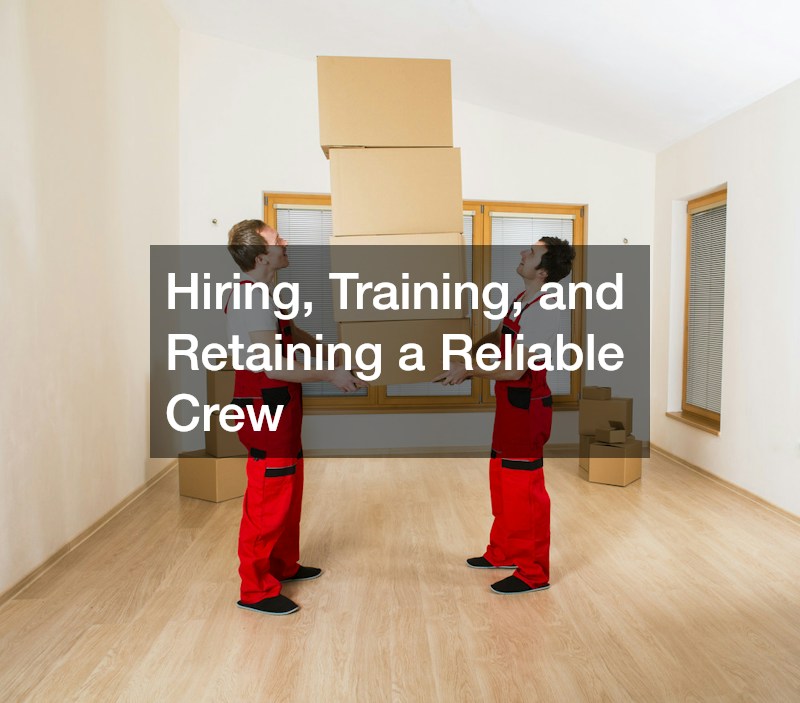
Training Crews on Lifting Mechanics, Truck Loading, and Damage Prevention
Never send a brand-new hire onto a paying customer’s job without hands-on warehouse or yard training first. Dedicate at least two full days of paid onboarding to core physical fundamentals:
- Safe lifting ergonomics: Teach team communication commands, bending at the knees rather than the waist, keeping heavy loads close to the center of gravity, and using forearm lifting straps properly on wide appliances.
- Pad-and-wrap discipline: Require every piece of wooden, glass, or upholstered furniture to be wrapped in quilted blankets and stretch film inside the residence before rolling it through doorways.
- Tier-by-tier truck loading (“building walls”): Train lead packers to stack heavy, sturdy boxes and dressers at the base against the front bulkhead, fill gaps tightly with pillows and bagged linens, and secure each vertical tier with E-track ratchet straps so nothing shifts during sudden highway braking.
A sharp, uniformed mover team that greets clients by name, protects doorways proactively, and communicates clearly throughout the day consistently earns five-star online reviews and generous customer tips.
Maintaining Spotless Trucks, Blankets, and Post-Move Sanitation Habits
Small presentation details leave lasting impressions. Make sweeping out the cargo box, shaking out and folding furniture blankets neatly, and wiping down cab interiors mandatory at the end of every shift so trucks arrive fresh and odor-free the next morning.
Equip every truck with a compact cleaning caddy containing a soft-bristle broom, microfiber cloths, multisurface spray, and Magic Erasers so crews can sweep away cardboard dust, wipe down fingerprint smudges on doors, and leave both the origin and destination spaces spotless before asking the customer for their final sign-off.
Marketing Your Startup and Building Strategic Referral Partnerships

Partnering With Realtors, Property Managers, and Commercial Janitorial Providers
Paid search ads can be expensive in competitive metro markets, making local B2B referral partnerships one of the highest-ROI marketing channels for a new relocation company. Introduce yourself in person—bringing coffee, rate sheets, and priority scheduling cards—to residential real estate agents, apartment complex leasing managers, senior living transition coordinators, and self-storage facility managers who interact daily with people preparing to move.
Do not overlook complementary home and commercial service providers who work alongside relocating clients at the exact same moment. Cross-referring leads with residential move-out cleaners—and building steady B2B relationships with a reputable office cleaning service that handles post-move suite turnovers for corporate tenants—creates a mutually beneficial network where partners recommend your crew whenever a household or business schedules a relocation.
Starting a relocation business rewards entrepreneurs who combine physical hustle with disciplined back-office systems. By defining a focused service scope and profitable rate structure, completing federal and state operating authority and insurance filings before taking bookings, equipping every truck with top-grade protective gear, training crews in safe wrapping and loading techniques, and cultivating local referral partnerships, you position your startup for sustainable growth from day one.
Take your first concrete steps this week: register your LLC and EIN, research your state’s household goods licensing checklist, price out protective gear and commercial insurance quotes, and build a launch plan centered on protecting every customer’s home as carefully as your own.